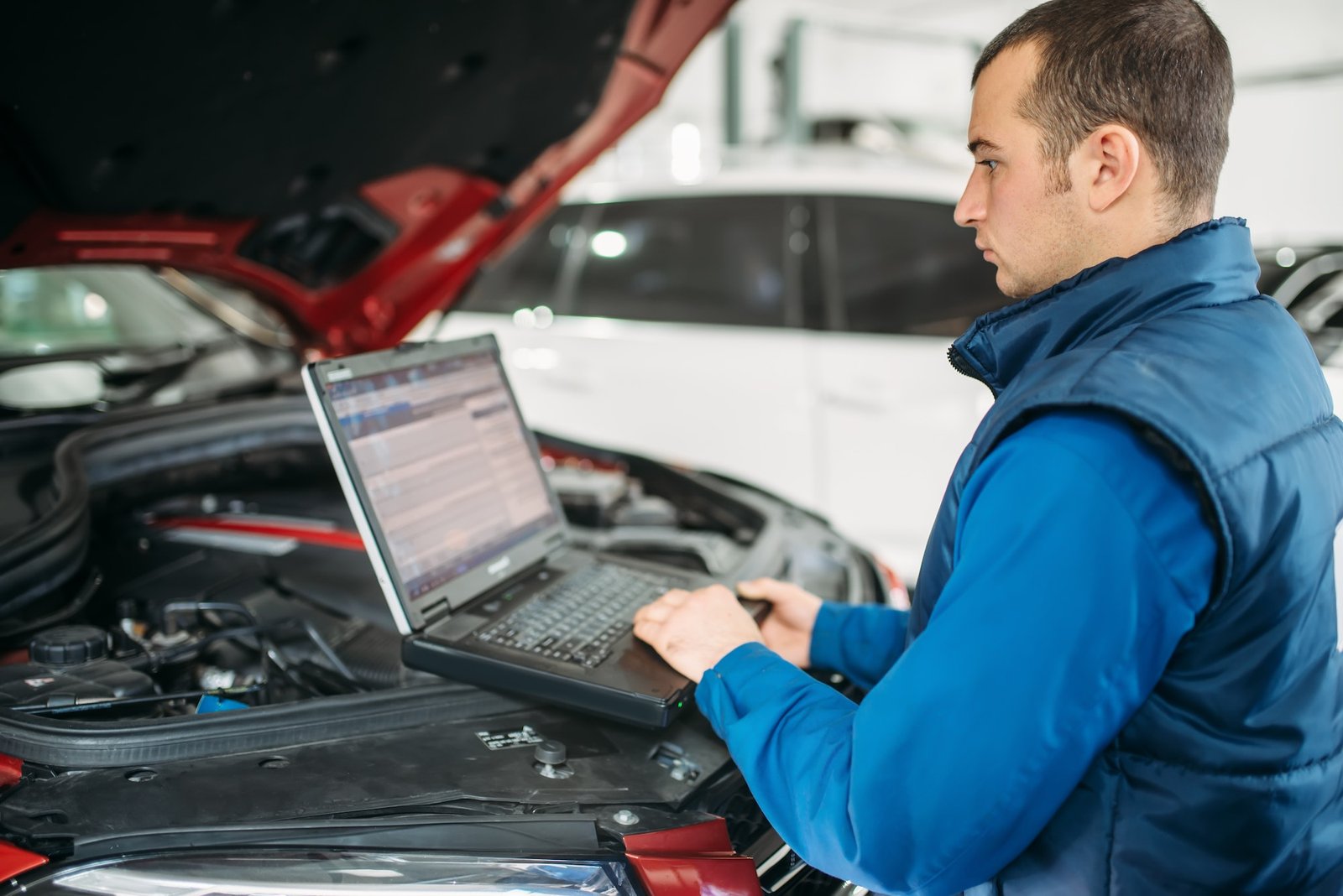
When the Check Engine Light illuminates on your dashboard, it signals that the vehicle’s onboard diagnostic system (OBD-II) has detected a parameter operating outside factory tolerances. However, pulling a trouble code is only the first step in diagnosing a mechanical or electrical issue.
What an OBD-II Code Actually Tells You
A diagnostic trouble code (such as P0300 for a random misfire or P0420 for catalytic efficiency) identifies the system or circuit reporting an anomaly—not necessarily the exact component that failed. For example, a lean air-fuel mixture code (P0171) can stem from a vacuum leak, a faulty mass airflow (MAF) sensor, a clogged fuel injector, or a degraded oxygen sensor. Replacing parts based solely on the code without live validation often leads to unnecessary expenses and unresolved issues.
The Role of Live Data Stream Analysis
Professional automotive diagnostics require real-time data analysis. Certified technicians evaluate sensor outputs while the engine runs under load, tracking variables such as:
Short-Term & Long-Term Fuel Trims (STFT/LTFT): Showing how the ECU compensates for air/fuel imbalances.
Mass Airflow Rates (MAF): Measuring the volume of incoming air against target tables.
Ignition Timing & Cam/Crank Correlation: Ensuring exact mechanical synchronization.
O2 & Air-Fuel Ratio Sensors: Monitoring exhaust gas composition pre- and post-catalytic converter.
Component-Level Testing with Specialized Tools
Intermittent electrical faults, voltage drops, and sensor signal noise cannot always be diagnosed through scanner interfaces alone. Advanced diagnostics employ digital storage oscilloscopes (DSOs) to capture raw electrical wave patterns from sensors and actuators. Smoke testing reveals micro-leaks in vacuum and intake paths, while digital pressure transducers evaluate dynamic compression inside the cylinders without full teardown.
Preventing Long-Term Engine Damage
Driving with an active warning light can cause secondary failures. An unresolved ignition misfire dumps unburned fuel into the exhaust, which can overheat and melt the internal matrix of a catalytic converter within miles.
At Master Torque Garage, our diagnostic process focuses on root-cause analysis using OEM-level scanning platforms and precision testing equipment, ensuring every repair is accurate from the start.